- Suffrage Stories: Suffragettes and Tea Rooms: The Eustace Miles Restaurant – and the Tea Cup Inn - this post looks at the cross-over between vegetarianism, socialism, the suffragette movement, and references in passing a lady giving a talk on "The Religion of the Great Mother".
- Suffrage Stories: Suffragettes and Tea Rooms: The Gardenia Restaurant - this was a Quaker establishment and was involved in the temperance campaign, the suffragette movement and campaigns for social justice.
- Suffrage Stories: Suffragettes and Tea Rooms: The Criterion Restaurant, Kate Frye, and the Actresses’ Franchise League - the Actresses' Franchise League and the Women Writers' Suffrage League met here
- Suffrage Stories: Suffragettes and Tearooms: Alan’s Tearooms - the proprietor of this tearoom was Marguerite Alan Liddle, whose sister Helen was imprisoned for a month in Strangeways prison in Manchester. Among other groups, the Catholic Women's Suffrage Society and the Forward Cymric Union (a militant Welsh suffrage society) met here.
- Suffrage Stories: The Suffragette 1911 Census Boycott: Where and What Was the Aldwych Skating Rink?
Showing posts with label suffragettes. Show all posts
Showing posts with label suffragettes. Show all posts
Sunday, 9 September 2012
Suffragettes and tea rooms
Who knew that researching the tea rooms where suffragettes held meetings would provide such a rich vein of historical information? Elizabeth Crawford at the Woman and her sphere blog has been researching this, and appeared on Radio 4 to discuss it.

Wednesday, 6 July 2011
Suffragette surveillance photos
BoingBoing has a great blogpost about surveillance photos taken by Scotland Yard of suffragettes in 1912.
 The original article from which the photos came was in the BBC Magazine in 2003.
There's also a potted history of the suffragettes on the BBC site.
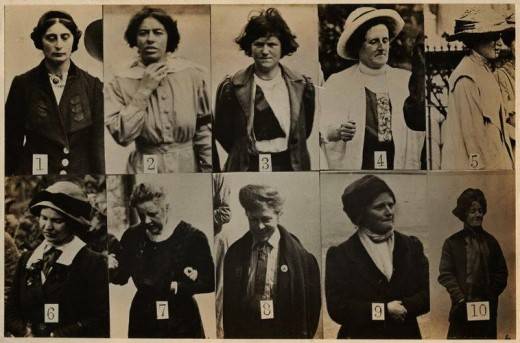
"On the one hand, the state considered them dangerous terrorists, but on the other it simply did not know what to do with them," says Ms Tulloch.
"The police and prison officials were so worried about what to do they made sure that every step they took was authorised by the Home Office. In the records you can find daily communications between the governor of Holloway Prison and Whitehall. In that era it was extremely rare for government to communicate so quickly."
But the police surveillance did nothing to stop the movement - nor did it dim the growing support they were finding in the country.
There's also a potted history of the suffragettes on the BBC site.
Subscribe to:
Posts (Atom)